

Frequently Answered Questions for the Research Community.
Educational reference on research-compound classes, storage, reconstitution, and handling. Information is provided for educational and research-reference purposes only.
The most-researched peptides, in one place
Explore our collection of quality-tested research compounds, carefully prepared and supplied as lyophilized research vials for laboratory research use only.
Peptides are short chains of amino acids that serve as signaling molecules in biological systems. Researchers study peptides for their potential involvement in cellular communication, tissue regeneration, metabolic function, and various physiological processes.
Both peptides and proteins are made up of amino acids. The primary difference is size. Peptides are shorter amino acid chains, while proteins are larger and more complex structures composed of many amino acids.
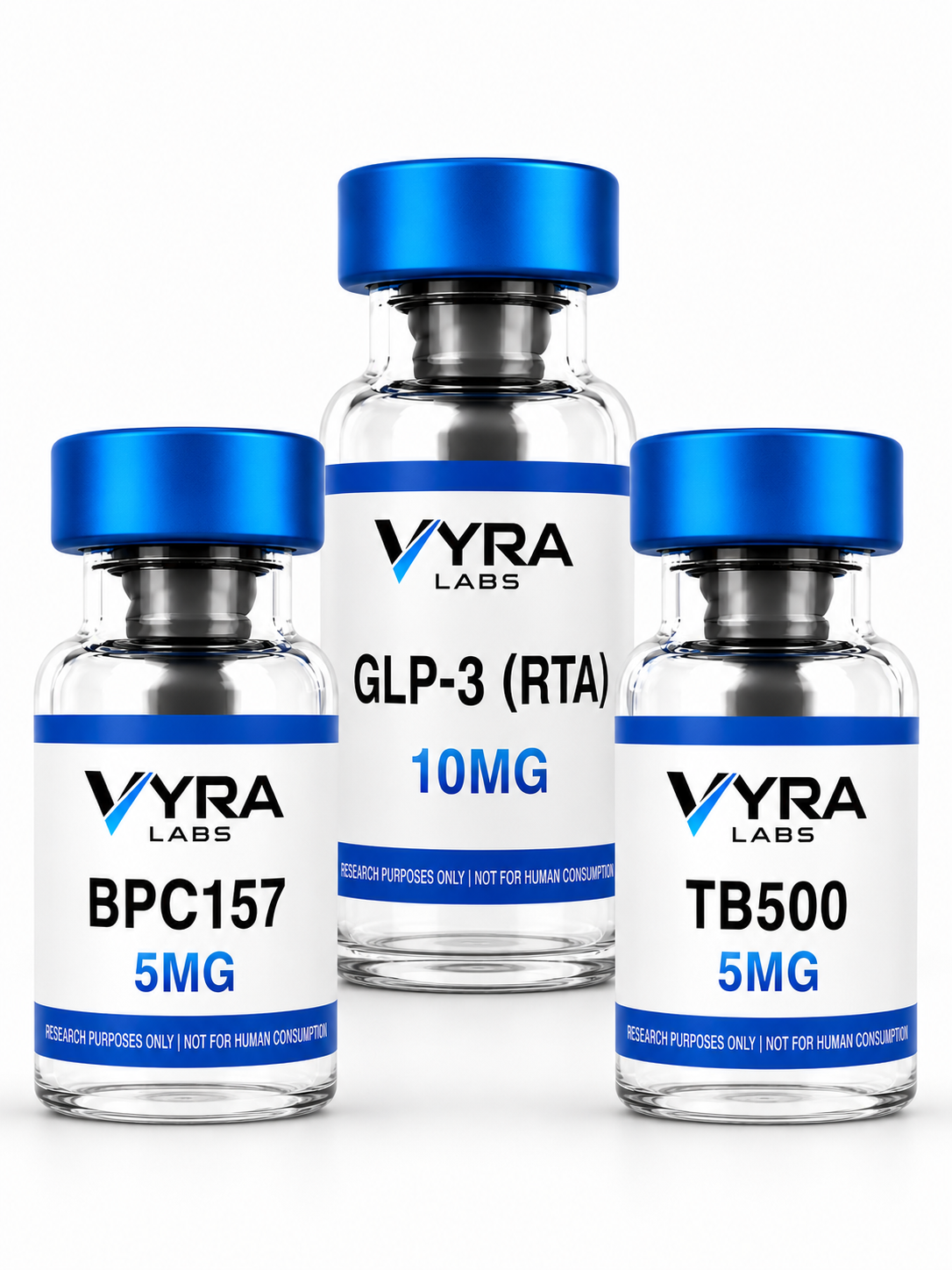
BPC-157 and TB-500 are among the most widely researched peptides in regenerative science. Researchers commonly investigate these compounds for their potential roles in tissue repair, cellular regeneration, recovery processes, and inflammatory pathways.
While both compounds are frequently studied in regenerative research, they are researched for different characteristics. BPC-157 is commonly investigated for tissue repair and gastrointestinal-related research, while TB-500 is often studied in connection with cellular migration, tissue remodeling, and recovery processes.
For optimal stability, lyophilized (unreconstituted) peptides should be stored in a cool, dry environment away from direct light. Long-term storage is generally recommended in a freezer. Reconstituted peptides should be refrigerated and handled according to accepted laboratory practices.
Stability can vary depending on the specific compound, storage conditions, and handling procedures. As a general guideline, many reconstituted peptides are commonly stored under refrigeration and utilized within approximately 30 days. Researchers should always follow accepted laboratory storage practices.
Bacteriostatic water contains a small amount of benzyl alcohol, which helps inhibit bacterial growth after multiple withdrawals from a vial. This makes it a preferred option for many laboratory research applications involving reconstituted peptides.
For maximum quality and consistency, VYRA Labs Research recommends utilizing research materials within two (2) years of purchase when stored properly and in accordance with accepted laboratory storage guidelines.
All products sold by VYRA Labs Research are intended strictly for laboratory research, analytical testing, and scientific investigation purposes only. Because our products are sold exclusively for research purposes, VYRA Labs Research does not provide dosage recommendations, administration instructions, treatment protocols, or guidance regarding human or animal use.
No. The products offered by VYRA Labs Research are research compounds and laboratory materials. They have not been evaluated or approved by the U.S. Food and Drug Administration (FDA) for human or veterinary use.
If you have questions that are not addressed here, our team is happy to assist you. Please use our Contact page or email support@vyralabsresearch.com. Our customer support team strives to respond to all inquiries in a timely and professional manner.
Explore compound classes
Explore compound classes
Peptides & Research FAQ
Common questions about research peptides, storage, reconstitution, and how VYRA Labs Research operates. All products are Research Use Only.
Peptides are short chains of amino acids that serve as signaling molecules in biological systems. Researchers study peptides for their potential involvement in cellular communication, tissue regeneration, metabolic function, and various physiological processes.
Both peptides and proteins are made up of amino acids. The primary difference is size. Peptides are shorter amino acid chains, while proteins are larger and more complex structures composed of many amino acids.
BPC-157 and TB-500 are among the most widely researched peptides in regenerative science. Researchers commonly investigate these compounds for their potential roles in tissue repair, cellular regeneration, recovery processes, and inflammatory pathways.
While both compounds are frequently studied in regenerative research, they are researched for different characteristics. BPC-157 is commonly investigated for tissue repair and gastrointestinal-related research, while TB-500 is often studied in connection with cellular migration, tissue remodeling, and recovery processes.
For optimal stability, lyophilized (unreconstituted) peptides should be stored in a cool, dry environment away from direct light. Long-term storage is generally recommended in a freezer. Reconstituted peptides should be refrigerated and handled according to accepted laboratory practices.
Stability can vary depending on the specific compound, storage conditions, and handling procedures. As a general guideline, many reconstituted peptides are commonly stored under refrigeration and utilized within approximately 30 days. Researchers should always follow accepted laboratory storage practices.
Bacteriostatic water contains a small amount of benzyl alcohol, which helps inhibit bacterial growth after multiple withdrawals from a vial. This makes it a preferred option for many laboratory research applications involving reconstituted peptides.
For maximum quality and consistency, VYRA Labs Research recommends utilizing research materials within two (2) years of purchase when stored properly and in accordance with accepted laboratory storage guidelines.
All products sold by VYRA Labs Research are intended strictly for laboratory research, analytical testing, and scientific investigation purposes only. Because our products are sold exclusively for research purposes, VYRA Labs Research does not provide dosage recommendations, administration instructions, treatment protocols, or guidance regarding human or animal use.
No. The products offered by VYRA Labs Research are research compounds and laboratory materials. They have not been evaluated or approved by the U.S. Food and Drug Administration (FDA) for human or veterinary use.
If you have questions that are not addressed here, our team is happy to assist you. Please use our Contact page or email support@vyralabsresearch.com. Our customer support team strives to respond to all inquiries in a timely and professional manner.
High-purity research compounds, ready to ship.
Browse the full catalog of batch-tested research peptides and laboratory materials — verified for identity and purity before every shipment.